
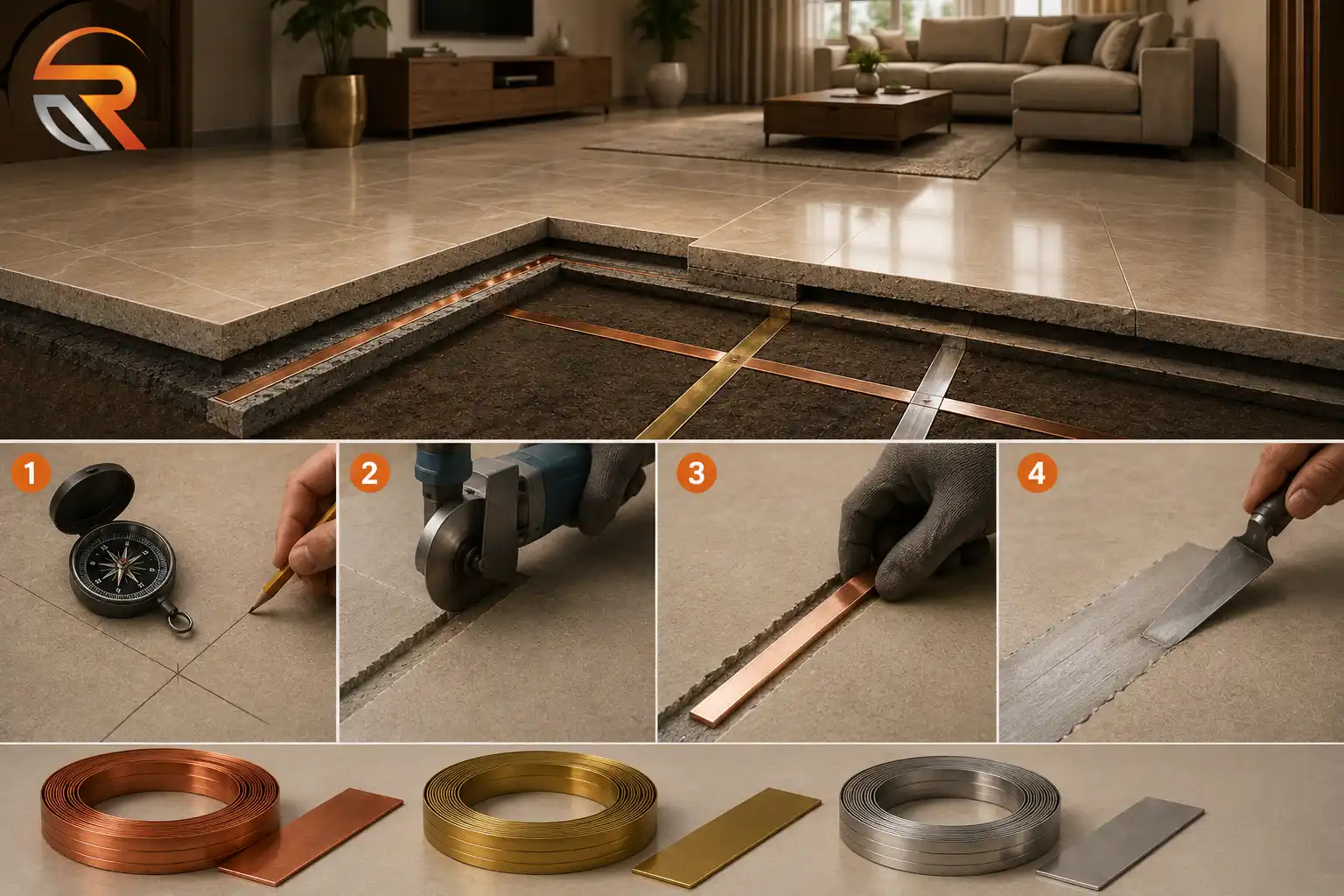
Why Sub-Surface Embedding?
While surface-level Vastu corrections can provide temporary energetic balancing, sub-surface floor embedding is widely considered the most permanent and effective correction methodology. By placing metal strips directly beneath the flooring or skirting, the corrective element becomes integrated into the structural foundation of the property itself.
This method creates a continuous and uninterrupted energetic pathway that remains active long-term without affecting the architectural aesthetics of the space. Because the strips are concealed beneath the surface, floor embedding is ideal for modern homes, offices, retail spaces, factories, and commercial buildings where visual cleanliness and structural preservation are important.
Unlike temporary remedies, professionally embedded metal strips operate continuously without requiring maintenance, repositioning, or visible installations.
How Floor Embedding Works
Floor embedding works by strategically placing conductive metals such as Copper, Brass, or Aluminium within specific directional zones identified through Vastu analysis. Each metal corresponds to a particular elemental correction and influences the energetic balance of the surrounding environment.
Once embedded beneath the floor, these metals regulate directional energy flow, stabilize weakened zones, and neutralize architectural imbalance caused by cuts, extensions, improper room placement, or structural irregularities.
Benefits of Floor-Embedded Vastu Corrections
- Permanent Integration: The correction becomes part of the structure itself.
- Completely Invisible: No visible alteration to interiors or flooring aesthetics.
- Non-Invasive: Requires minimal cutting and no major demolition.
- Low Maintenance: Once sealed, the system requires virtually no upkeep.
- Long-Term Stability: Delivers continuous energetic balancing for years.
- Suitable for All Property Types: Works in residential, commercial, and industrial spaces.
Choosing the Right Metal
Material selection is one of the most important aspects of successful Vastu correction. Different metals are used depending on the directional imbalance and elemental requirement of the property.
- Copper: Used for Fire-related corrections and conductive energy balancing, especially in the South-East.
- Brass: Preferred for grounding and stabilization in South-West Earth-element zones.
- Aluminium: Commonly used for Space-element correction and lightweight directional balancing.
High material purity is essential because impurities reduce conductivity and weaken the effectiveness of the correction. Premium-grade metals ensure long-term performance and environmental durability.
Step-by-Step Installation Process
Floor embedding requires technical precision, accurate directional analysis, and careful execution. Below is the standard installation methodology followed by Republic Metals Vastu for professional implementation.
- 1. Directional Mapping: A precision compass is used to identify the exact directional zone requiring correction. This step determines the placement angle, metal type, and correction pattern.
- 2. Structural Assessment: The flooring material, thickness, layout, and architectural constraints are evaluated before cutting begins.
- 3. Creating the Channel: A thin groove, typically around 3mm in width, is carefully created within the floor, tile joint, or skirting area. Major demolition is not required.
- 4. Cleaning the Groove: Dust and debris are removed completely to ensure proper embedding and adhesion.
- 5. Embedding the Metal: The selected 99.9% pure metal strip is placed precisely into the groove according to the directional mapping plan.
- 6. Alignment Verification: Placement accuracy is verified again before sealing to ensure the correction remains directionally effective.
- 7. Sealing the Groove: White cement, epoxy resin, or matching filler material is used to seal the channel. Once finished, the strip becomes virtually invisible.
Directional Precision Is Critical
Even minor directional inaccuracies can reduce the effectiveness of a Vastu correction. Professional floor embedding requires exact angular alignment, especially in complex commercial or industrial projects where large layouts increase the margin for directional deviation.
This is why compass calibration, zone marking, and installation measurements are always handled with high precision during professional implementation.
Applications Across Different Properties
Floor embedding is widely used across multiple property types because of its flexibility and discreet integration.
- Homes & Apartments: Correcting missing corners, improper room placement, and elemental imbalance.
- Offices: Improving directional stability, productivity, and energetic flow.
- Retail Spaces: Supporting customer movement and commercial balance.
- Factories: Managing machinery-related energetic distortion and structural imbalance.
- Hotels & Commercial Buildings: Large-scale directional harmonization without architectural disruption.
Common Mistakes to Avoid
Improper installation can significantly reduce correction effectiveness. Some common mistakes include:
- Using low-purity or mixed-alloy metals
- Incorrect directional placement
- Improper groove depth or alignment
- Inconsistent sealing material
- Random installation without detailed Vastu analysis
Professional guidance ensures that the correction is both technically accurate and structurally safe.
Why Non-Invasive Correction Matters
One of the biggest advantages of floor embedding is that it preserves the architectural integrity of the property. Traditional reconstruction or demolition-based modifications can be expensive, disruptive, and aesthetically damaging. Embedded metal corrections provide a sophisticated alternative that works within the existing structure.
This makes floor embedding especially valuable in fully finished homes, luxury interiors, offices, and operational commercial facilities where major renovation is impractical.
Sub-surface floor embedding transforms Vastu correction into a permanent structural solution by integrating directional balance directly into the foundation of the property.
Conclusion
Floor embedding with premium metal strips remains one of the most advanced and effective methods of modern Vastu correction. By combining accurate directional mapping, high-purity metallurgy, and precision installation techniques, it becomes possible to permanently neutralize architectural imbalance without altering the visual or structural character of the space. Whether used in homes, offices, or industrial facilities, embedded metal correction provides a seamless and long-lasting path toward energetic harmony and stability.